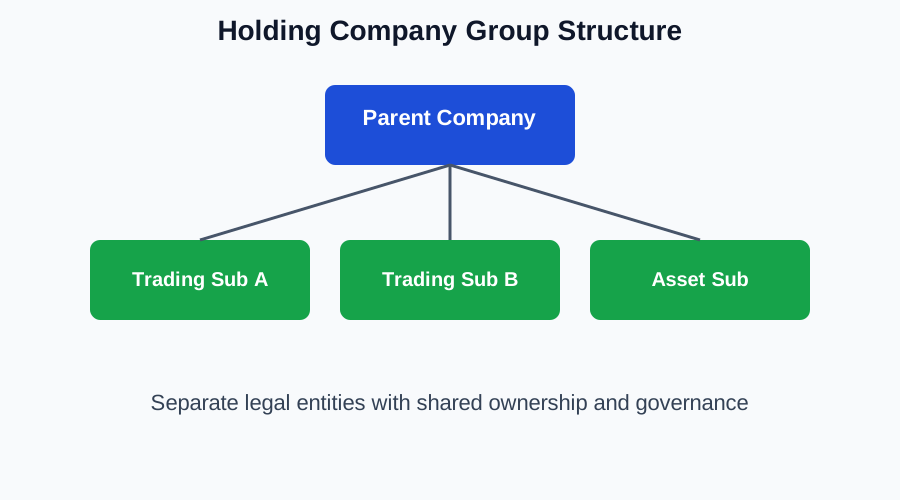
A holding company is a company that owns shares in other companies instead of trading directly. In the UK, this structure is commonly used to separate ownership, protect assets and make group management easier.
Why businesses use a holding company
- Separate risk between operating businesses and long-term assets.
- Centralise ownership for investors and founders.
- Keep group cash management and governance more consistent.
- Prepare for future acquisitions or disposals.
Typical UK group setup
| Entity | Main role | Example activities |
|---|---|---|
| Holding company | Owns shares and sets group strategy | Capital allocation, board governance |
| Trading subsidiary | Runs day-to-day operations | Sales, delivery, staffing |
| Property or IP subsidiary | Holds key assets | Property ownership, licensing |
UK tax and legal points to check
A holding-company structure can improve efficiency, but it must be designed correctly.
- Keep each company legally separate with its own records and bank activity.
- File annual accounts and confirmation statements at Companies House for each entity.
- Manage corporation tax obligations per company and document any intra-group transactions.
- Review dividend and share-disposal treatment with a qualified UK tax adviser before making major decisions.
Common mistakes to avoid
- Treating group companies as if they were one legal entity.
- Missing written agreements for loans, management charges or shared costs.
- Ignoring transfer-pricing and governance requirements where cross-border operations are involved.
- Delaying compliance work until year-end.
Practical checklist before setting up
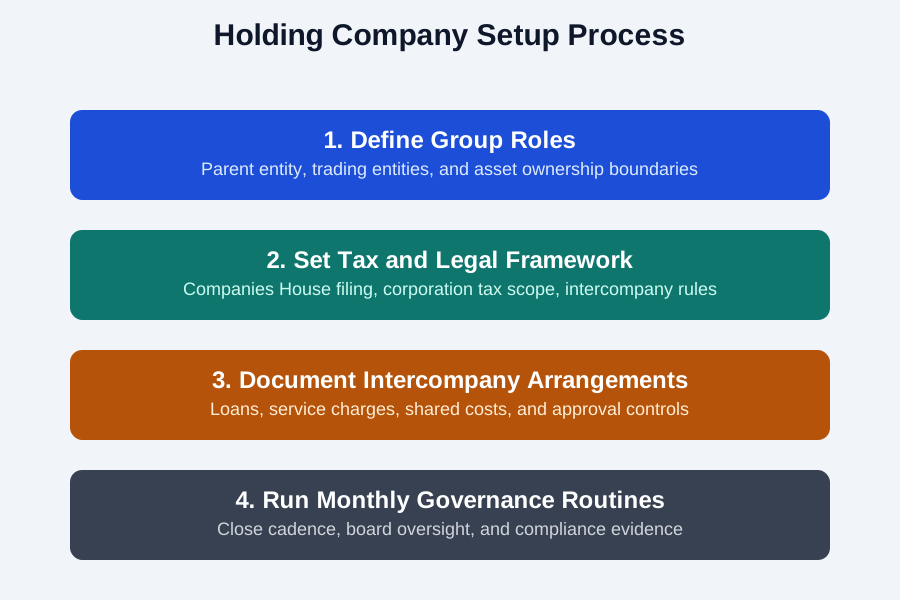
- Define what each company in the group should do.
- Map tax, legal and reporting obligations for each entity.
- Document intercompany funding and service arrangements.
- Set monthly close and compliance routines across the group.
A holding company can be a strong structure for growth, risk control and succession planning, but only when governance and compliance are handled with discipline from day one.